Showing posts with label synchronous tools. Show all posts

Friday, 25 April 2014

Modes of Communication in the Second Language Classroom - Struggling for Balance

We Often Do What is Most Easy


As a second language teacher, the most dominant modes of communication I tend to facilitate for my students in my classroom are the interpretive and interpersonal modes. This is perhaps because the activities that I deliver the most are those that nurture these particular communicative modes - and these are the activities that I find easiest to implement.
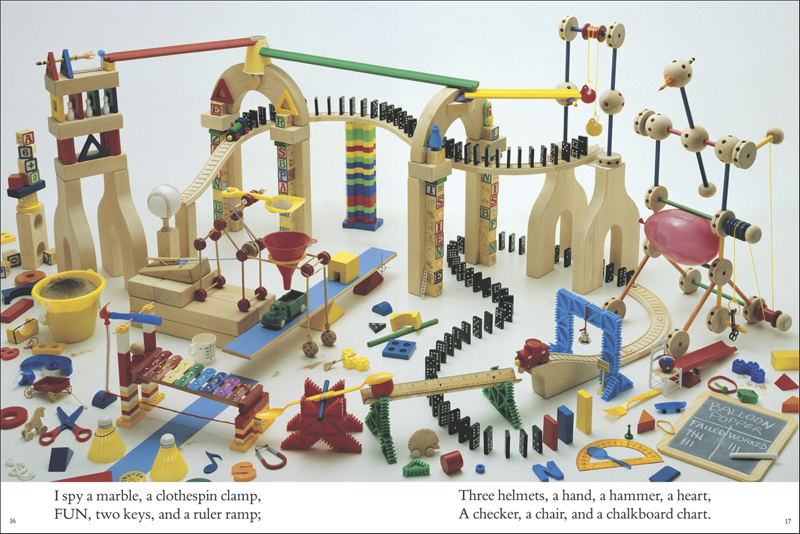
This picture can easily be used as an I-Spy game that can reinforce vocabulary relating  to colours, shapes, numbers basic everyday objects, direction, preposition, as well as simple question and answer between student.

For example, I find it quite simple to build a lesson around a picture. All you have to do is find a compelling and busy picture that attracts the students attention - perhaps one that is colourful and filled with many different objects or characters doing many different things. These pictures are plentiful on Google Images. When I find such a picture, I do the following:
  1. Firstly, I ask my students what they see in the picture in order to review or introduce new vocabulary.
  2. Then I model the type of interpretive question that I hope that students focus on - usually done by modelling questions and answers and I scaffold for students by providing sentence frames.
  3. Lastly, I ask students to conduct similar conversational activities based on the picture. It could be a information gap, question and answer, find the differences, find the similarities, I-spy, etc. Generally speaking, these conversational activities are opportunities for student to practice and internalize the structures and vocabulary introduced earlier in the lesson.
As you can see, it is very simple to design a 30-minute lessons around a single picture so long as you find a suitable picture, determine the linguistic phrases, structures, vocabulary, and sentence frames needed to support student learning, and a fun conversational activity that reinforces the acquisition of learning. By doing so, a teacher can easily provide opportunities for interpretive and interpersonal communication.

Oh-No! Not Another Language Project!

This is not to say that I never have student experience the presentational mode of communication. However, aside from regular reading and writing tasks, it is significantly less in frequency because to me they usually involve projects that require much planning, time, and often collaboration. Examples of these types of tasks could be a role-play, cooking presentation, preparing an audio or video recording in which students describe their favourite toy or express why they like  or dislike a certain food, generating a informational poster, or creating a panorama with an accompanying written caption and oral commentary.  Due to the these requirements, I find myself limiting such activities to end of unit/topic assessments.

Can Technology Help Achieve Balance?

In order to increase the number of presentational communicative activities thereby achieving more balanced approach to facilitating the three communication modes, I could try to create mini-projects for students throughout the way that would be more formative in nature. Another alternative would be introducing a flipped classroom model, where time at home is spent mostly for interpretive communication activities and language reinforcement while face-to-face class time is dedicated to more interpersonal and presentational communication tasks - such as dialogs, conversations, and projects (i.e. pair work or group work).

In the purely distance learning environment, where the student is online 100% of the time, I believe will be more difficult for facilitate natural interpersonal communication between students due to the limitations of technology. Despite the availability of synchronous communicative tools like voice and video chat or asynchronous communicative tools like text messaging, email, and discussion forums, students never receive all the visual, facial, and interactive cues that indicate a breakdown in communication.

For example, when using asynchronous textual communicative tools, all forms of oral intonation and emotion are absent. When using voice chat, facial expressions (or non-verbal communicative cues), which often convey more than verbal speech, are hidden from students. Even when using a synchronous video conferencing tool such as Skype, clearing ambiguity and confusion is difficult. For example, there is no way for students to naturally or physically point to the picture that is presented digitally in case there is misunderstanding or confusion about what part of the picture a student is referring to. In this case, students will naturally revert back to their native language to bridge the gap in communication and mend any errors. In addition, technical difficulties are another very common re-occurring (more often than not!) phenomenon that can break down communication entirely.

All in all, blended learning model can help me achieve a balance in exposing students to various communicative modes. A purely online learning environment could potentially do the same thing, but one may increased communication breakdown and only facilitate very artificial modes of interpersonal communication. Teachers must be cautious when considering and using technology because it is never value-free and definitely transforms communication in very obvious ways - and sometimes it becomes more restrictive, robotic, obscure, and unnatural.

Wednesday, 2 April 2014

The Dread of Joining the Instructional Technology Bandwagon

The Dread of Technology

Even though I consider myself quite tech savvy, having used technology my whole life and experimented and utilized various Web 2.0 tools in my teaching, it felt quite daunting to use the Google Hangouts tool at first because I hadn't participated in one before. So as you can imagine, the idea of arranging and starting a hangout was really intimidating. However, as soon as I was over the learning curve, it was quite simple and almost second nature.

Looking at it from another angle, perhaps it was merely connecting with other second language teaching professionals through a synchronous online medium which was scary. I am typically someone who spends time making connections and maintaining my own learning networks either by speaking to colleagues whom I know very well face-to-face or by asynchronously communicating through email behind a veil of "anonymity" or by having a one-sided "dialogue" with other language teaching professionals and authors by reading their books and research. In the mediums mentioned earlier, a safety net is always there whether it be due to familiarity (as in the case of face-to-face conversations with colleagues of the same school) or anonymity (as in the case of email or reading works of others). It is the face-to-face synchronous medium that eliminates the sense of security - there is no where to hide and what unfolds may be quite unpredictable!

Have you ever had stage fright?!
I guess the closest analogy I can think of is the dread someone feels when speaking in public for the first time or performing on a stage for the first time. When you know you have to face others face-to-face, the feeling of dread or having butterflies in your stomach is always there and only is lessened through experience - but never disappears!  
 
As a group, we did not face many challenges using Google Hangout: as soon as we scheduled a meeting time via Yammer chat, we all met at the appointed time and had a really fruitful discussion about the pedagogical, logistical, and feasibility issues relating to using online or blended learning in the classroom. The unfamiliar interface and learning where each app was and what each button did was perhaps the only challenge. 

What fascinated me was how much we were alike in our views and experiences in implementing online and blended learning models: generally speaking we all conveyed that we doing our best to set up online/blended learning environments that are tailored for our specific teaching environment and described the deficiencies of our current environments, yet we acknowledged that the ideal environment that we aspire for is logistically unfeasible, whether it be due to financial, time, or technological constraints. We all echoed how most of the tools that would deliver the best experiences and results for online/blended learning are either too expensive or perhaps too difficult to manage, integrate, and learn.   

-------------

Instructional Technology - Just Another Bandwagon?

Personally, I think the dread of the unknown is perhaps the greatest obstacle preventing teachers from trying something new. Veteran teachers are often trapped in their own pedagogical practices that they have been accustomed to - for they believe that the way they have always done it is the way it should always be done. When people call from bandwagons and advocate for the adoption of a "powerful innovative brand new solution to all your teaching needs proven to provide quick and enormous results" they look at it with a very critical eye.

That being said, often times teachers feel a sense of despair from the lack of guidance from experts in the field on how to best teach their students as well as a sense of disillusionment from the reality of the classroom. The combined sense of despair and disillusionment cause many teachers to reluctantly succumb to joining the bandwagon not knowing where it will take them. Grittner (1990) does a great job describing the origin of bandwagons in second language education and attributes it a gap or a void in leadership or authority - one between theory and practice: second language experts and researchers often cannot relate to the day-to-day realities of teachers and pedagogical bandwagons, trends, and fads with their great promises and claims tend to fill this void. 

The emotion I am trying to describe is best captured in the words of this teacher: 

And now the barker calls to us again. We want very much to listen because we are beset with problems: declining enrollments, constricted job opportunities, curtailed financial support. But we are more cautious this time. We want to examine the rhetoric before we hop onto yet another bandwagon. So, we ask, "Why should I individualize?" And the catch phrases and glib  promises dance temptingly before us. (Disick, 1973, p. 248)

----------------------

Instructional technology, online-teaching, and blended-learning are just a few more bandwagons that many teachers feel the need and urgency to jump on and give it a try. Unless you are a risk-taker and can venture into the unknown, you will be left behind. Moreover, if you are too critical of technology, you may miss your chance to hop on and acquire any whatever riches lie at the end of the journey. 

Are you ready to jump on the "technological/online/blended learning" bandwagon? Why or why not? Share your comments below! :)

---------------------

References:

Disick, R. S. (1973). Guest Editorial: Individualized Instruction: Promise versus Reality.The Modern Language Journal, 57(5/6), 248–250. doi:10.2307/323724

Grittner, F. (1990). Bandwagons revisited: A perspective on movements in foreign language education. In D. W. Birckbichler (Ed.), New perspectives and new directions in foreign language education (pp. 9–43). National Textbook Co.

Images: 

http://singingtatsujin.com/wp-content/uploads/2013/09/causes-of-stage-fright.jpg

http://esheninger.blogspot.ca/2012/08/jumping-on-bandwagon.html

http://goobs-says.blogspot.ca/2011/11/why-i-dislike-certain-technophobes.html